
NECレッド
ロケッツ川崎
NEC RED ROCKETS KAWASAKI
Victory through ceaseless growth
Daily care and the pursuit of challenges open up possibilities for the future
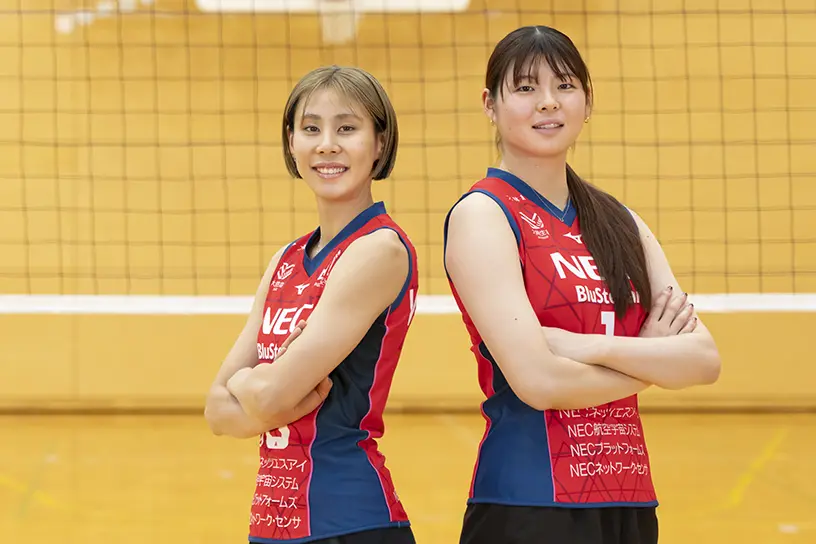
Yukiko Wada / Nichika Yamada
November 27, 2025
Interview: Takaya Hirano / Photos: Kazuya Hokari
A growth-supporting mindset and consideration for the team spirit
- ITO: How did you first get involved in volleyball?
-
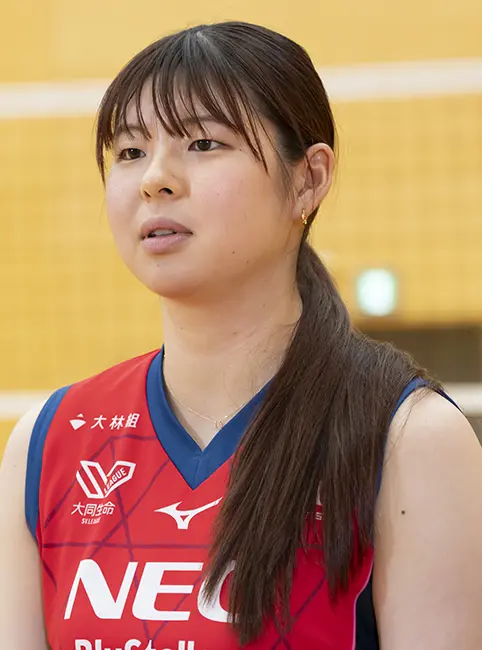
Yamada: My parents played soft volleyball, and as I was tall, I wanted to do a sport where I could shine. So I started playing volleyball in junior high school.
Wada: I took swimming lessons in elementary school, but I quit swimming in the fourth grade. Around that time, I saw the Japan national volleyball team playing in an international competition on TV. That’s what drew my interest and inspired me to start playing.
- ITO: When did you develop a goal-oriented mindset as athletes?
-
Yamada: When I was in high school, I was selected to represent Japan in the under-age category, and I played alongside girls my age from other teams against overseas teams. The level of play and commitment was beyond what I was used to, and the glimpse I had of this new world helped me rediscover the thrill and enjoyment of volleyball. It also fueled a desire to aim higher.
-
Wada: It was fun just to become able to do things I’d been taught and start winning games. When I graduated from high school and joined a team in the V.League (as Japan’s top tier league was called at that time), I was in two minds about whether to retire after five years or to keep playing indefinitely. But I got called up to the Japan national team in my third year for the first time and I felt like I wanted to aim higher. I think it made me take the sport more seriously than before.
- ITO: With various experiences under your belt, you are now key players for NEC Red Rockets Kawasaki. What do you think are the good points about this team?
-
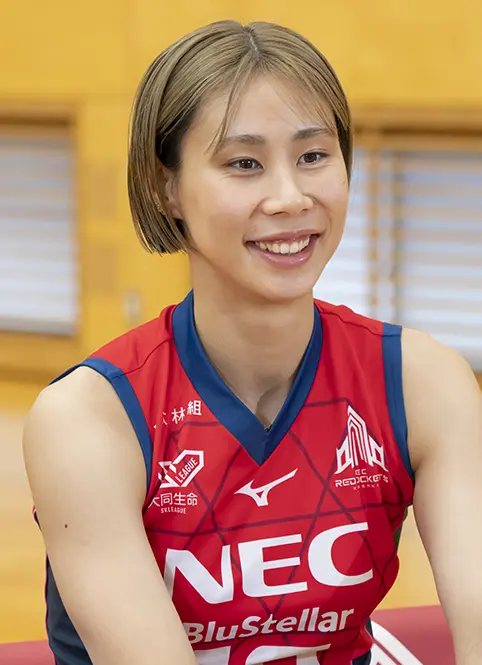
Yamada: The caliber of the players is exceptional. I’m the captain this season, so I’m thinking about what I can do to pull the team together. There are good times and there are bad times, but every game makes the team stronger, so I’m looking forward to our upcoming games.
Wada: Some players don’t play well or get depressed over the course of the long season, but there’s a sense of warmth on this team in that we’re always ready to support each other, look out for players who are going through a rough patch, and say encouraging things to pick them up. Everyone’s role is different, but a great aspect of this team is that all the players are always aiming to perform at a high level.
- ITO: You both play on the Japan national team, but what are your goals for the club team?
-
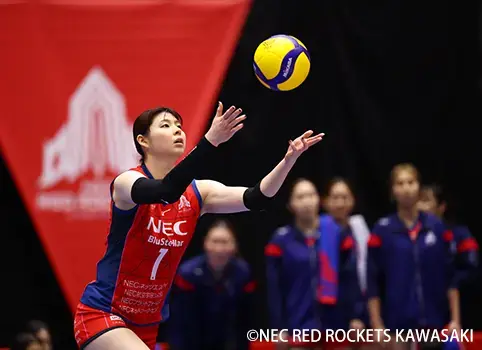
Yamada: As a team, our main goal is to win the SV.League, which we were within a whisker of achieving last season. As captain, I feel like this is the season in which I myself need to grow as a human being. As for my play, it’s naturally important for me, as the middle blocker, to do a good job of blocking, but since we’re offense-oriented, I also want to be able to score more points from attacks in the middle.
-
Wada: As a team, we can’t ever lose sight of the goal—winning the league. Personally, my goal is to always keep the world in mind as I practice every day. Whether in practice or during a game, I keep saying to myself that I should never lower the play level I’m satisfied with. Even if a play works, I make it a point to ask myself if it’s really good enough.
Conditioning to keep playing
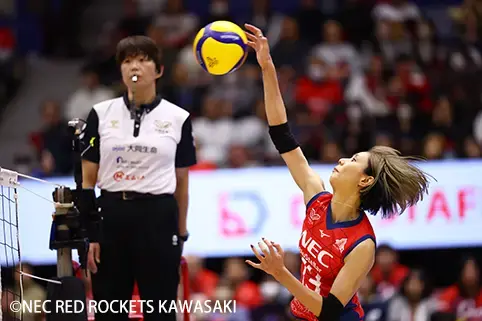
- ITO: You’re both very goal-oriented. What tricks do you employ to manage your condition? The domestic SV.League runs from October to April of the following year, and there are also cup games during that time. From June, you play in the Nations League for Japan; in August, there is a world championship. It’s an unforgiving schedule, isn’t it?
-
Yamada: Yes. Because there is little time to rest, it’s difficult to take a break and rebuild your body. There are times when I need to recover from an injury, but rather than just maintaining my condition, I try to constantly improve it, including by strength training.
-
Wada: I always pay attention to changes in my body. I suffered a mild hamstring (back of the thigh) strain playing last season on the Japan national team. I got so single-minded about the injury I didn’t notice the imbalances developing in other parts of my body, and the competition ended in disappointment. These days, instead of just paying attention to the places where I’m hurt, I make it a point to stay aware of whether my overall physical balance is off and notice and address any issues as quickly as possible.
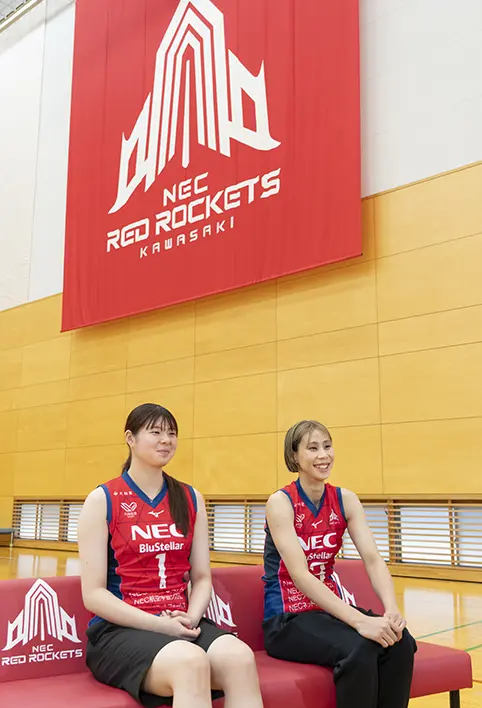
- ITO: The establishment of the new SV.League in the 2024–2025 season significantly increased the number of domestic games. Has this had any impact?
-
Yamada: More games intensify the physical burden, so I’ve become much more aware of doing things to ensure post-match recovery. Especially when we have back-to-back matches on Saturday and Sunday, it’s vital to figure out how to treat any issues and get back to a fresh state in the time between the end of Saturday’s match and the next day’s game. I’ve learned to immediately shift my focus to that once the game’s over.
Wada: Because of my role as a player on the team, I don’t often play full games one after another, so not a lot has changed for me personally. But when I do play for longer, I make recovery a priority.
- ITO: Have your attitudes to condition management changed since your student days?
-
Wada: Since joining this team in July 2024, I’ve been spending a lot more time getting ready for practice. In high school, I’d just do some stretching for about 30 minutes, but now, because I’m prone to shoulder injuries, I do things like stimulating my shoulders with rehabilitation-type movements before starting practice. Not only am I working as part of a team, but I’ve become more conscious of how to prevent injuries in my own way.
Yamada: I’ve been with this team ever since graduating from high school, so doing rehab before practice like her is now natural for me. But looking back on my student years, there were days when I hardly did pre-practice stretching, and even if I had pain somewhere, I just relied on my youth to get through it. [laughs] Now, my body is my livelihood, so I’m conscious of how to get myself in the best possible condition in practice.
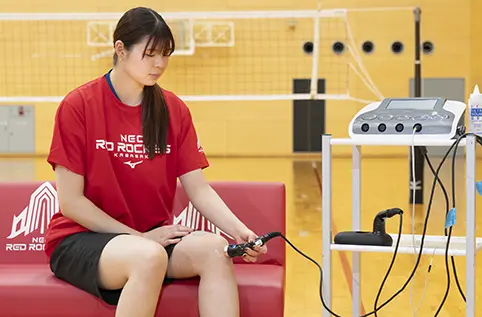
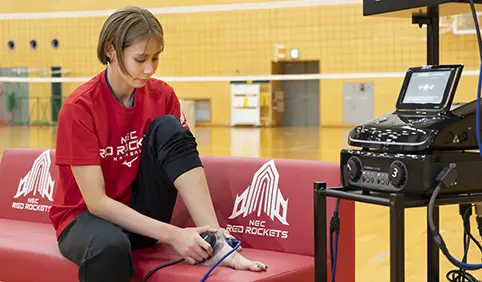
- ITO: We’ve heard you use treatment devices, but how exactly do you use them? Can you tell us what prompted you to start using them and whether your impressions of them changed after you started?
-
Yamada: I’m susceptible to knee problems, so I use a combination therapy device. Before I joined this team, treatment devices were used on me when I went to the osteopathic clinic, but I just did what I was told and honestly wondered if they really worked all that well. After joining the team, I started thinking about what I should do to control my condition, and regarding the treatment device, when I injured my Achilles tendon, sometimes the pain was localized and sometimes it was broader. I started thinking about whether to apply it to a pinpoint area or more broadly and whether to use both electrical stimulation and ultrasound. I came to the view that it’s important to be conscious of how you use these devices.
-
Wada: Sometimes my ankles swell up after practice, so I use a three-dimensional interferential current therapy device to relieve them. I used to leave everything to trainers. It wasn’t until after joining this team that I started thinking about using treatment devices on my own. We often have to wait our turn to use the team’s treatment devices both before and after practice, so I didn’t want to wait in line to use them, and I did actually wonder whether it would be all that effective or not. But on one occasion recently, I felt the signs of a muscle strain in the front of my thigh. Wanting to avoid a major injury, plus hearing a teammate say the ultrasound therapy device works amazingly well, I tried it, and felt the effects within about a week.
Achieving a deeper understanding of the body through conditioning
- ITO: What self-care routines do you do at home?
-
Yamada: I do stretches and contrast baths. Since I’m prone to knee problems, if my knees swell up after a practice or a game, I start with the team’s treatment devices, and after getting home, I use a portable low-frequency electrotherapy device. I take the low-frequency electrotherapy device and a massage gun with me when I travel with the national team.
Wada: When fatigue builds up and my lower body feels heavy, it becomes stressful during games, so I sometimes wear a device that puts pressure on my legs to promote blood circulation. I bring that with me, too, on away trips.
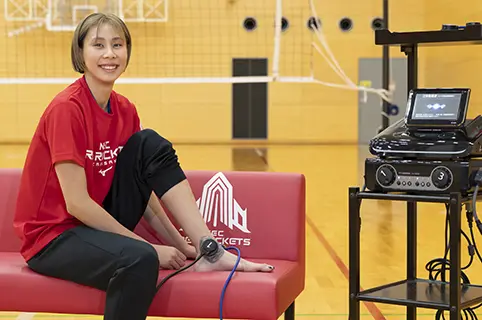
- ITO: You mentioned that you’ve started to take a mindful approach to using treatment devices. Has this given you a better understanding of what’s happening in your body?
-
Yamada: It has. I’ve learned that knee pain isn’t necessarily about issues with the knee itself, and it often flares up if an ankle or hip joint is in poor condition. The pain ends up manifesting in the knee. So, rather than just focusing on my knees, I’ve learned I can reduce the load on the knees by increasing the range of motion in my ankles and hip joints. Now I loosen these areas myself or explain the problem and get advice from the trainers.
-
Wada: I feel like I’ve become able to communicate my physical condition specifically to the trainers. Now, for example, if my shoulder hurts, I consider the impact the symptoms have on my play. I then tell the trainers about my current condition and about the movements I want to be able to do by game time. By going into greater detail in my conversations with the trainers, I think I can learn how to stretch and become aware of more factors to better understand my condition. This also means that I now spend less time worrying about what to do about pain and am able to resolve anxieties more quickly. I also feel less anxious during games because I can grasp my condition on that day.
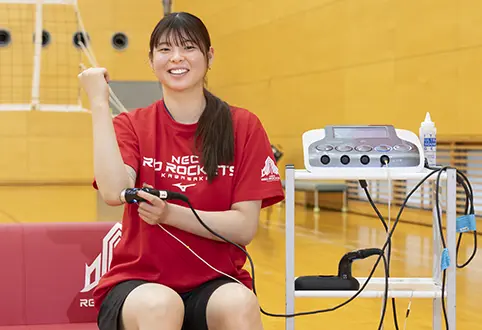
- ITO: Do you have any advice for aspiring athletes with regard to treatment devices?
-
Yamada: Obviously, you have to be in the best possible physical condition if you want to keep playing for many years or if you want to perform at your best. Some people might think they don’t need to use treatment devices in their preparations, but you should definitely try them if you think they might improve your performance or help you maintain your condition.
-
Wada: I used to associate treatment devices only with injuries, but it turns out they are also effective for pre-conditioning. I mean, they are also useful in stabilizing the “condition of the day,” which is important for athletes.
Pursuing continuous growth as athletes
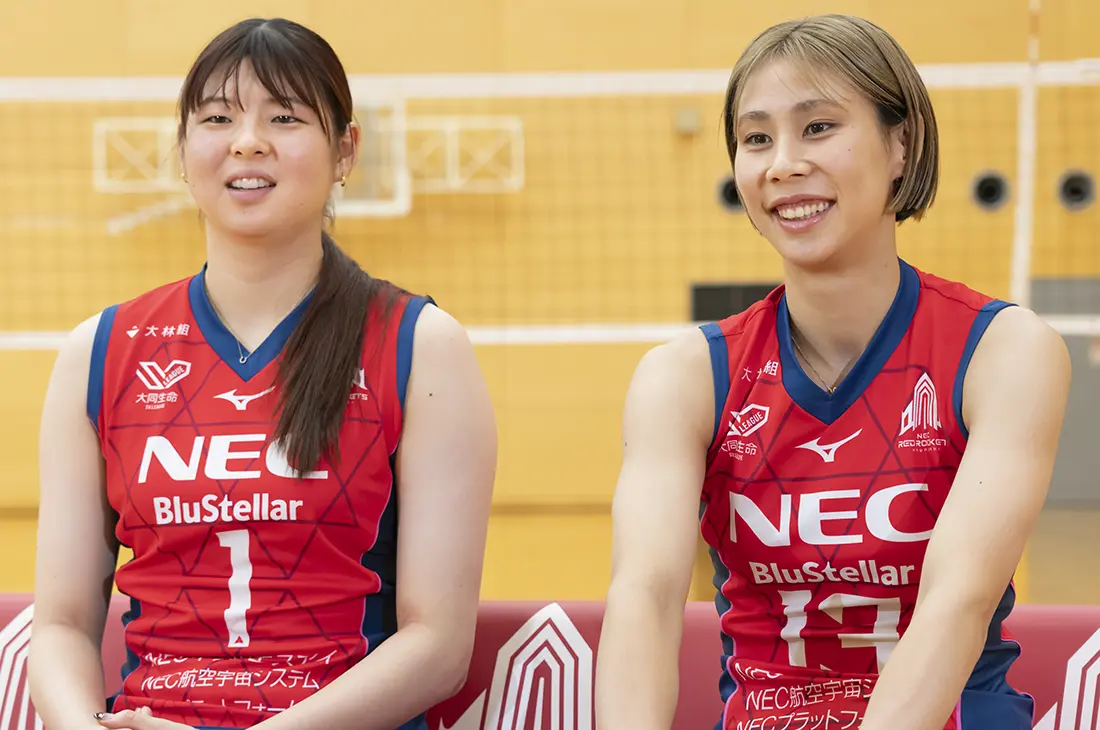
- ITO: Finally, can you both tell us your vision for the future?
-
Yamada: I think that as you gain experience, you gain a deeper understanding of yourself. To keep growing, I hope I can become stronger by identifying, one by one, the steps I can take to make me feel secure and confident, whatever the situation. I don’t have a clear ideal image in my mind. But I do want to be a player who continues exceeding my best. Athletes are enjoying longer careers than in the past, and I want to keep playing for as long as I can.
Wada: Ultimately, I want to be a player capable of standing shoulder to shoulder with the world’s top athletes. In pursuing this vision, I want to keep growing to make people keep wondering how far I can go, and I want to develop the kind of character that will inspire people to recognize my growth. I want to continue being an athlete people want to support, one that my juniors want to be like.
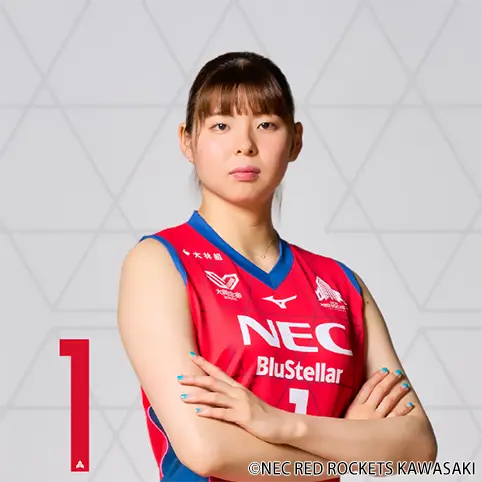
Born February 24, 2000, in Aichi Prefecture.
Influenced by her parents, she began playing volleyball in junior high school. She was selected in high school to the Japan national team, which won the 11th Asian U18 Volleyball Championship. In her senior year, as the team ace, she led her team to the All Japan High School Volleyball Championship.
After graduating from high school, she joined the NEC Red Rockets (now NEC Red Rockets Kawasaki). Taking advantage of her height (184 cm), she plays a key role in offense. She was named team captain for the first time during the 2025-2026 season. Her goal is to lead the team to its first SV.League championship.
Member of 2025 Japan women’s national volleyball team
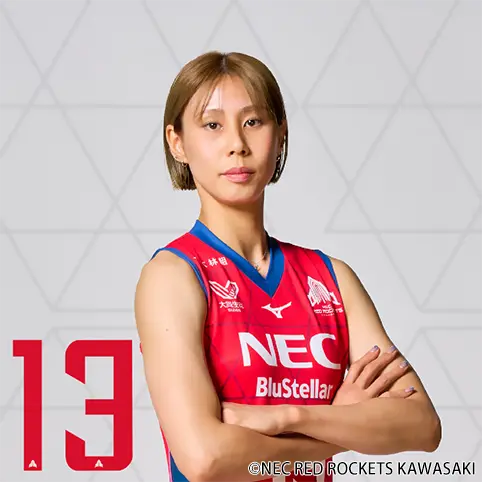
Born January 8, 2002, in Kyoto Prefecture.
She has competed in national competitions since she was an elementary school student. During her high school years, she led the U18 Japan national team as captain. The team won the Cornacchia World Cup 2019, in which she received the best player award.
After graduating from high school, she joined JT Marvelous (now OSAKA Marvelous). Thanks to her strengths as an attacking player, she thrived as a point-getter for the team. In 2024, she moved to NEC Red Rockets Kawasaki, helping the team win games with her powerful spikes and jump serves.
Member of 2025 Japan women’s national volleyball team